
How to Clean Produce: Protect Your Family from Bacteria & Pesticides
There was once a time when I didn’t give a second thought about how to clean produce before cooking. But, after finding all the toxins, mold, and bad bacteria in my son’s body, environmental input (and how to manage it) is something that I now think about a lot.
The purpose of this post is not to scare you. At the end of the day, there is only so much you can do as a human being and a mother living at this time. The point, however, is to do what we can to protect ourselves and our loved ones from preventable harm.
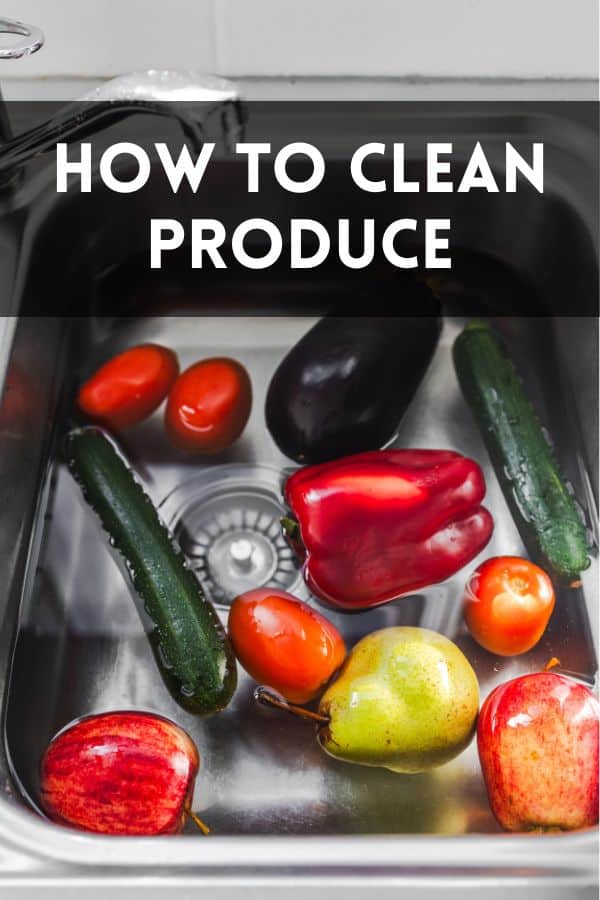
In this post, you’ll learn how to properly clean produce to remove bacteria and pesticides from your fruits and vegetables. It takes just a little more time and effort, and you’ll feel much better knowing that your food is as clean as it can be.
[If you want to read more about my family’s journey, read my bio or 9 Practical Environmental Self Care Ideas for Mama Bears.]
How to Clean Produce
Let’s get right to it and start with the techniques. The following methods for properly cleaning produce come from two sources: the Environmental Working Group (EWG) guidelines and my son’s naturopathic doctor’s guidance.
They are similar and both use vinegar and baking soda for the ultimate clean. But my naturopath’s methods call for longer soaking times than the EWG’s.
The EWG explains that it all depends on the availability of your time and ability, on which method you choose. But if you have conventional produce and a few extra minutes, the vinegar or baking soda methods are definitely the way to go.
The EWG Methods for Washing Produce
- Rinse the item under running water for at least 20 seconds; or
- Soak the item in a large bowl of clean water for 10 to 15 minutes for dirt and debris to settle at the bottom. Rinse again under running water before consumption; or
- In a bowl or tub of water, mix 1 teaspoon of baking soda per cup of water or 1 cup of food-grade vinegar with three cups of water. Soak your produce for 5 to 10 minutes and rinse thoroughly under clean water before consumption.
The EWG also advises removing excess moisture after washing, such as with a clean kitchen towel, salad spinner, or paper towels.

The Naturopath’s Methods for Washing Produce
- For thinner-skinned fruits and vegetables (leafy greens, softer/smaller berries, peaches/nectarines): Combine 4 parts cold water to 1 part white vinegar. Soak produce in the prepared solution for 20 minutes, then rinse thoroughly under clean running water. Produce should be odor-free after rinsing.
- For thicker-skinned fruits and vegetables (apples, pears, tomatoes, onions, eggplant): Combine 1 teaspoon of baking soda for every two cups of clean water. Soak produce in the prepared baking soda solution for 10 minutes, then rinse thoroughly under clean water.
The vinegar is excellent for removing harmful bacteria, according to my doc, while the baking soda is great for removing pesticide residues.
A word of caution: for delicate produce such as berries, make sure you get the vinegar-to-water ratio properly and only soak for up to 20 minutes. Depending on how ripe your produce is, the acid can actually destroy the food.
RELATED POSTS:
Helpful Notes
I want to cover a few points before we get to the actual how-tos. These are my lessons from having been on this journey a little while, which I hope you’ll find useful.
Buy Organic If You Can
As you might already know, certain fruits and vegetables are known to be “dirtier” than others.
The Environmental Working Group (EWG) publishes a list of the most pesticide-prone items every year. For 2026, at the top of its list are spinach, kale, collards, mustard greens, strawberries, grapes, nectarines, apples, pears, and blueberries.
Do you see any of your favorites there? I know I do. Strawberries are my daughter’s favorite fruit, and she’d eat them with every meal if she could.
So, buying organically grown produce removes much of the pesticide burden from the get-go. This makes your job much easier. And these days, the price difference between organic and conventional produce can be small, depending on the product. It’s a price I am willing to pay.
If you are concerned about plastics in your food, you can always choose the farmers market over the grocery store. Make sure to ask if the farmer uses organic growing methods, however, since not all vendors are organic.
Wash Well When Choosing Conventional
But, if you go to the grocery store and find the price difference to be unaffordable or the quality of the organic product much less, then choose the conventional and wash the heck out of it using the following methods.
This is what I do, and I am okay with it. Strawberries and blueberries are prime examples.
Do I know that it removes 100% of the pesticide burden? No, but this is the best I can do at this time, and that’s what I can do.

If I’m really worried about a certain item, then I just choose an alternative. I might skip conventional strawberries for organic blueberries, for example.
Or, you can select an item from EWG’s “Clean 15,” which likely will contain the least pesticides. They include pineapples, avocados, papayas, sweet corn, cauliflower, watermelon, and mangoes!
Eat Fresh Fruits and Vegetables to Help Your Body detox
Toxins usually enter our bodies through ingestion, inhalation, and skin absorption. If we are healthy and have minimal exposure, then our vital organs, including the liver and kidneys, process these intruders and eliminate them.
A healthy gut and digestion are crucial to this natural system of ongoing detoxification. And consumption of certain foods helps your body detox and eliminate better.
These warriors of nature include foods rich in antioxidants and vitamins (berries and greens), as well as fiber (legumes, vegetables, etc.).
Similarly, certain foods hinder our body’s ability to detox. Such foods include highly processed foods, sugar, and refined carbohydrates, and thus should be consumed mindfully.
(We are not completely anti-sugar or anti-processed foods in our home. We do try to keep them to a minimum, however.)
In summary: eat more fruits and vegetables, eat less sugar and highly processed foods, and drink lots of water! It helps your body naturally detox.

Final Thoughts
When I come back from the grocery store, the first thing I do is put away the meats and wash my produce. I get my vinegar and baking soda out, as well as the kitchen timer.
It might take a little more time than if I were to just put everything away at once. But I KNOW that I’ve already cleaned those apples and pears and don’t have to wonder when I want to give them to my kids.
It’s been a bit of a journey with my son’s health, but I’m amazingly grateful that he hasn’t had a major reaction for a while and is now thriving. We took a lot of steps to get here, and washing our produce properly has been one of the key steps that gives me the peace of mind.
Again, it’s not ever about perfection. It’s about what we can and are willing to do, and once you make the switch, it’ll be as easy as brushing your teeth.
This post was all about how to wash your produce properly for clean living. Hope it helps!